
Build a Sacramento Resident Evidence Table
One person can surface in many Sacramento record systems. Each system answers a different question. The County Assessor connects a name to a parcel owner or mailing address. The Clerk/Recorder index links a party to a deed or another recorded instrument. A court result names a case party and an event. A city directory, yearbook, license, or business filing adds context. That context helps separate people who share a name.
| Record | What It Confirms | Where to Search | Access |
|---|---|---|---|
| Assessment roll | Owner, situs parcel, mailing destination | Sacramento County Assessor Parcel Viewer and assessor office | Parcel online; owner at counter or NextRequest |
| Recorded index or deed | Name tied to a title, lien, or transfer event | Clerk/Recorder recorded-document index | Free index since 1849; instrument by office or order |
| Court docket | Party name, case identity, dates, status, public filings | Sacramento Superior Court gateway | Remote, kiosk, account, or copy route by case |
| Voter record | Registration status and permitted fields | California My Voter Status or county file request | Individual check; approved application for a file |
| Vital record | Birth, death, marriage, or divorce event | County Recorder, Clerk, CDPH, or Superior Court | Informational and authorized-copy rules differ |
| Business or license filing | Entity affiliation, agent, credential, status, address of record | California bizfile and DCA license search | Free public search and displayed filing data |
| Directory or yearbook | Listed residence, spouse, occupation, school connection | Sacramento Room and Center for Sacramento History | Digitized, licensed, or in-person access |
Start from what you already know. An address points to the parcel viewer first. A suspected case points to the court index and its date range. For a classmate or relative, a yearbook or historical street directory may place the person faster than a modern index. Whatever the route, a Sacramento resident lookup gains strength when the date, spelling, source, and coverage of each query are written down as you go.
Read Sacramento Criminal Resident Records
Criminal Public Case Access is a separate Sacramento Superior Court search. It covers cases from 1989 to the present. It offers two public modes. You can search by name or by case number. A name search uses the submitted criteria and can return several people with identical names. The system does not fingerprint-identify anyone, so a matching name is never proof of identity. When a notice, filing, or prior record supplies a case number, that search is far stronger. It pins the file to one person.
A public result can display the case number, party names, filing date, case type, status, register of actions, hearing details, and document links where remote display is permitted. Sealed and juvenile material may be absent. California clean-slate and sealing rules can also remove or mask eligible criminal information. An empty result therefore calls for a careful reading of coverage. It calls for a careful reading of access limits, not a quick conclusion.
For a separate registry category, the California Megan's Law registry carries its own official warnings and search modes. Its public page reminds users to rely on official details rather than a bare name match.
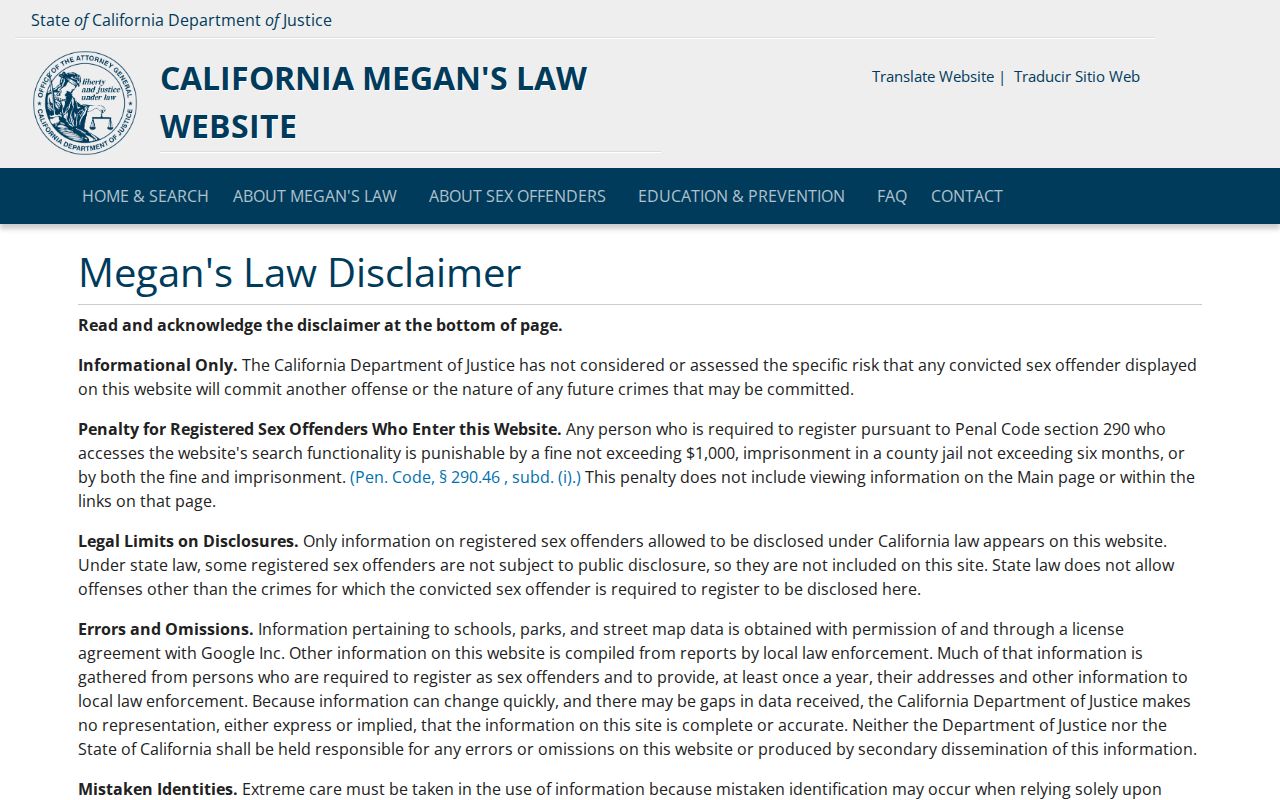
The registry is not a residence roll. Confirm the identity and heed the official warning before treating any result as relevant to a Sacramento resident lookup.
Note: The court's party result is only an index lead, so use the custodian, case file, or kiosk when the distinction matters.
Search Sacramento Historical Court Records
Sacramento offers no single universal court name search. Instead, coverage splits by era. The historical system handles civil cases from 1936 to 1995. It also covers probate cases from 1948 to 2007. The newer account-based system covers public civil documents after November 13, 2007. It also handles probate and trust-estate documents after February 5, 2007. Those cutoffs give a resident lookup a clear era boundary. Confidential, sealed, guardianship, conservatorship, adoption, and other restricted material may still be unavailable through remote access.
| Search mode | Fields or identifier | Coverage and use |
|---|---|---|
| Criminal Public Case Access | Name or case number | 1989-present; exact criteria and same-name review |
| Historical Case Search | Name, case, or filing date | Civil 1936-1995; probate 1948-2007 |
| New Civil Portal | Party or case search; account | Public civil records after 11/13/2007 |
| Probate Portal | Party or case search; account | Trust and estate documents after 2/5/2007 |
| Family Search | Name, case number, or filing date | Family case information; confidential documents excluded |
| Traffic | Driver-license number, citation, or case number | Identifier-based search, not a general name browse |
| PACER, Eastern District | Party, case number, date, or nature filters | Federal cases with an account and federal fee rules |
For Eastern District of California cases, the PACER federal court access page is a separate route. Its federal docket context can add a case number or a party trail. An account and federal fee rules apply.
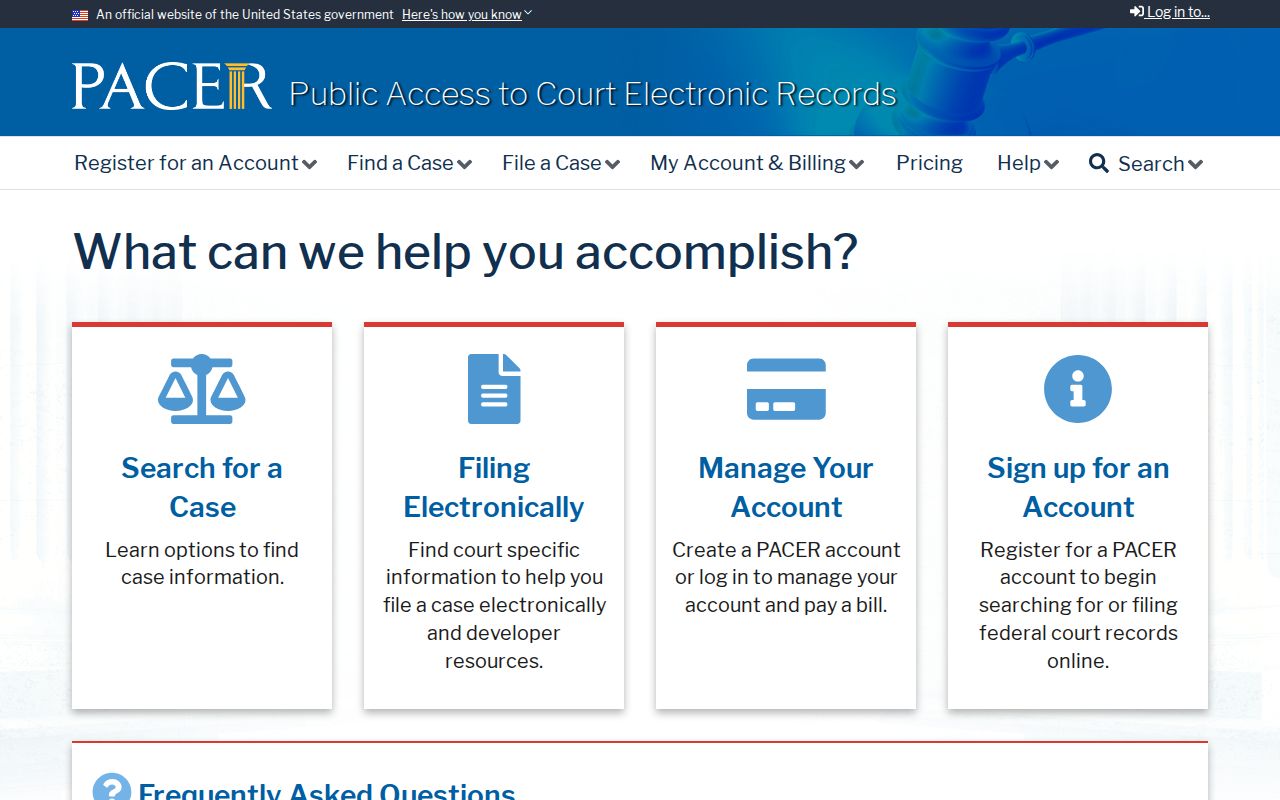
A federal docket is a court record, not proof of a Sacramento residence. Match the party, case, date, and jurisdiction before linking it to a local resident lookup. Details from different systems rarely align by accident.
A Sacramento court result is easiest to compare up close. Copy its visible fields into a small inventory:
- Case number and case title or party names.
- Filing date, case type, and current status.
- Register of actions or dated case events.
- Hearing information and the division handling the matter.
- Public document links, when remote display is permitted.
- Docket
- The court's running record of a case, its filings, events, and status.
- Index versus image
- An index gives searchable metadata. An image is the underlying filing or instrument, which may require a kiosk, office visit, order, or copy fee.
- Certified copy
- A custodian-authenticated copy issued for a permitted evidentiary or official need, not the same as a free search result.
Family file requests go through a separate web form. Required fields include the Case Number, Party Last Name(s), requester Full Name, and E-mail. Civil records from before the modern cutover may sit off-site. Physical delivery downtown takes about 10 business days. Mailed requests often take 4-6 weeks. For cases before 1937, the court directs researchers to the Center for Sacramento History.
Verify Sacramento Court Results at a Kiosk
Remote convenience is not the full public view. Sacramento Superior Court kiosks are free to inspect. They may display public material withheld from internet viewing under the California Rules of Court. The court recommends kiosk verification before relying on its courtesy viewer. Online downloads are free where offered. Staff search and copy work, however, can carry a charge.
Verification path. Save the case number, party spelling, filing date, and status from the remote search, then compare those fields at a courthouse kiosk or ask the correct division about a copy.
Staff fees listed in the court materials include a $15 charge for a search longer than 10 minutes. Copies cost $0.50 per page. Certification is $40. A privately maintained courthouse copier charges $0.25 per copy. It takes cash or a copy card. Civil support answers at 916-874-5522 option 3. Probate is 916-875-3400 option 2, and Small Claims or Limited Civil is 916-875-7746.
Anchor a Sacramento Resident to Property
Start with a situs address or an APN in the Assessor Parcel Viewer. The result shows the APN, situs, assessed values, some characteristics, and parcel geometry. Owner names stay off the web for privacy reasons. The counter and NextRequest open the fuller public record. That record includes the secured-roll owner and mailing address. Exemptions, tax-rate area, zoning, land-use codes, and Recorder book and page sit in that fuller file too.
Work the chain with care. Normalize the address first, then save the APN. Pull the public owner and mailing destination next. Then use the Recorder book and page or party index to find the acquisition instrument. Remember what a mailing address is. It can be a trust, a business, a manager, or a PO box. Matching situs and mailing supports a connection. But it never proves the owner actually lives there.
- Search the parcel viewer by address or APN and save the map result.
- Ask the assessor for the public owner and mailing fields through the counter or NextRequest.
- Search the recorded index by party and year, then order or inspect the instrument.
- Compare the name with a court, directory, license, or business record that has a separate date or fact.
One name is rarely the whole story. When the question becomes every address on a named road, the Sacramento street directory carries the parcel and deed chain to street scale.
Use Sacramento Voter Status Carefully
My Voter Status is an individual check, not a browse tool. It asks for a first name, last name, and date of birth. A driver-license or California ID number may also be required. SSN digits can serve instead. A voter can confirm registration, party preference, vote-by-mail status, and polling or vote-center details. Election participation shows up as well. It is not a public name directory. No one can use it to browse a Sacramento street or ZIP.
The county voter file is a different product. The application must name the requester or organization. It must give contact information and state the product and geography. It must also declare a permitted purpose, such as election, scholarly, journalistic, political, or governmental use. The applicant supplies identification and signs use restrictions. The listed fee must be paid too. Approved orders are ready within 72 business hours. A Standard Voter File costs $80 and a Custom Voter File $105. A four-week Voting Activity Status subscription runs $308. An eight-week subscription costs $616. An Election Day status report is free.
The Sacramento County voter-file information page displays the application channel and its limits.
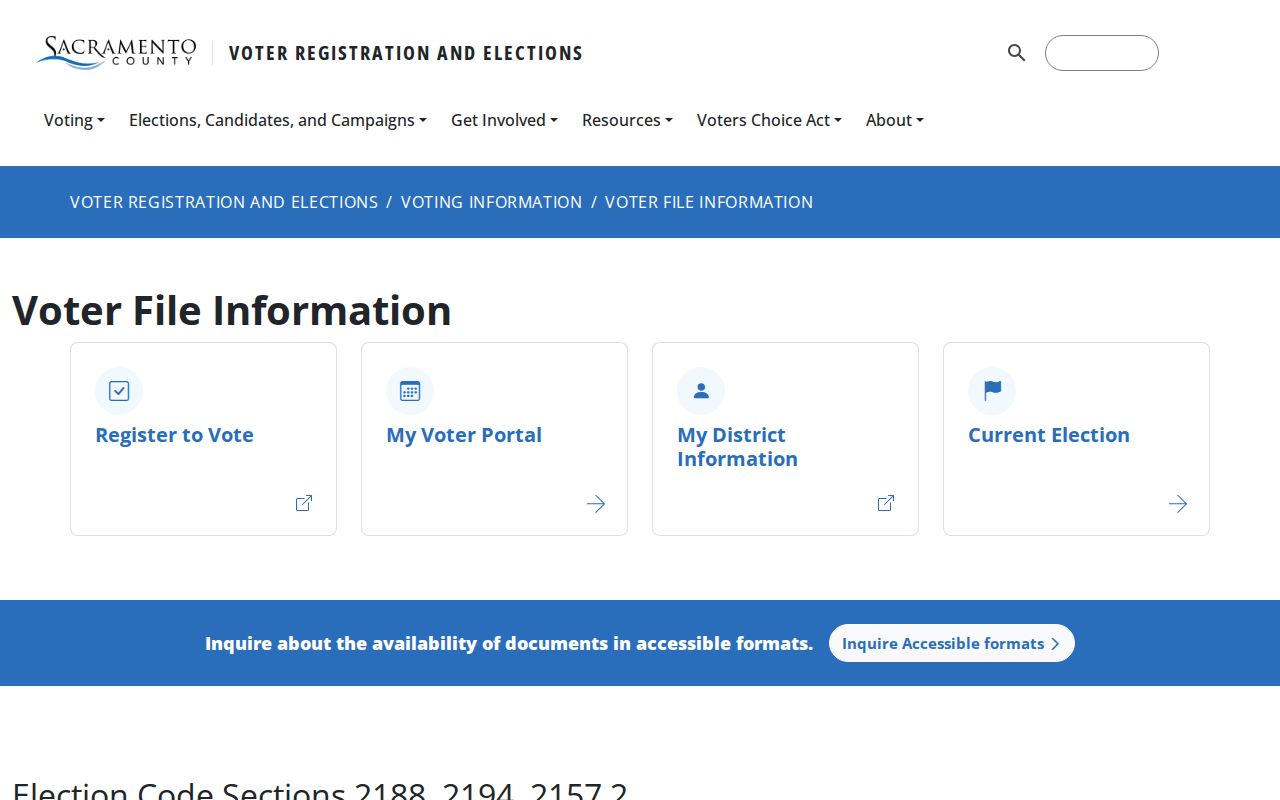
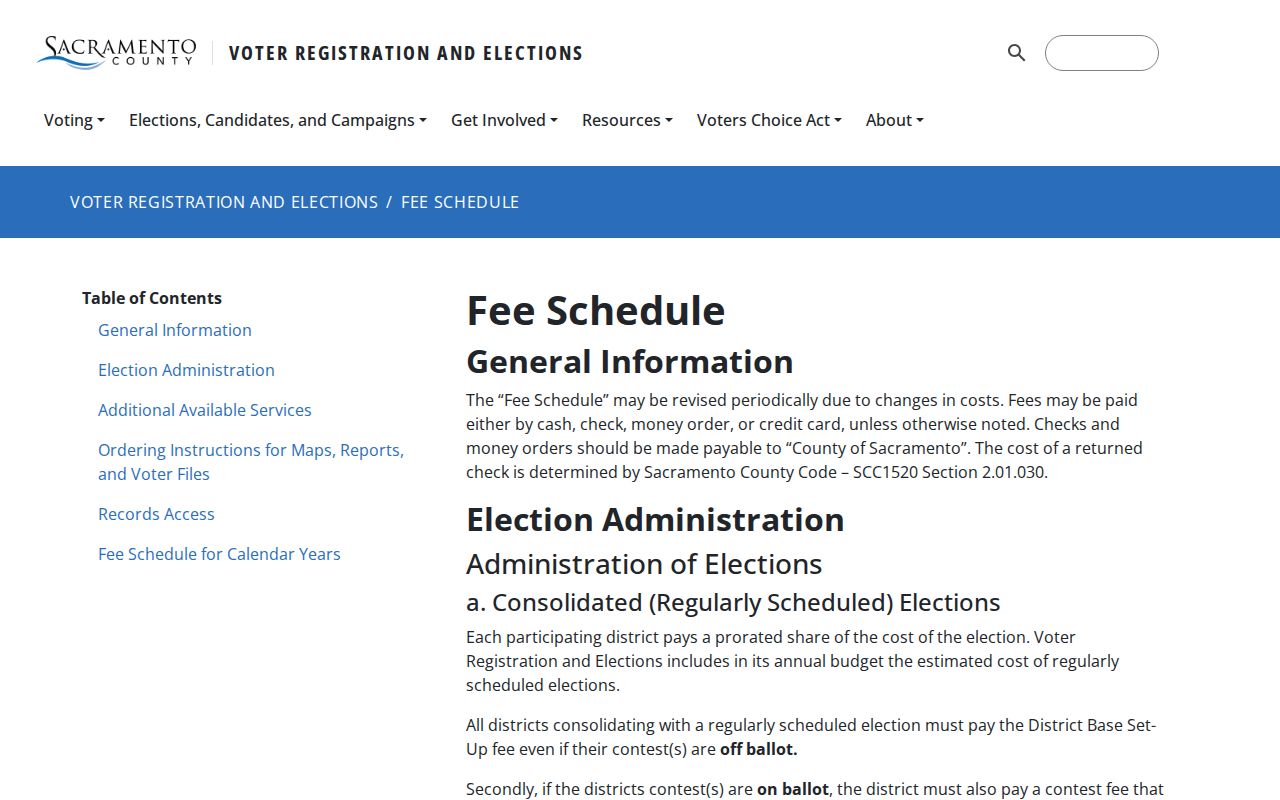
Scoping by precinct, ZIP, or custom geography is allowed. The file is still not an unrestricted block roster. Without written county authorization, no one may sell, lease, deliver, or republish it. The fee schedule helps with planning a request. It does not turn My Voter Status into a browseable Sacramento resident lookup. Sacramento County's election fee schedule lists the current costs.
Campaign Services handles voter questions at 7000 65th Street, Suite A, Sacramento, CA 95823, and the office can also be reached at 916-875-6276 or voters-campaignservices@saccounty.gov. Voters covered by Safe at Home or other confidential-registration rules keep their details shielded from the public rolls.
Match Sacramento Vital Records Lawfully
California has no simple age cutoff that opens every older birth or death copy. Health & Safety Code §§103525-103526 separate an authorized certified copy from an informational copy. An authorized copy needs an eligible requester plus a sworn, notarized statement. Anyone may order an informational copy. It arrives marked not valid to establish identity. Family Code §509 controls confidential marriage access. Family Code §9200 keeps adoption files confidential.
| Birth | Sacramento Recorder for county events; CDPH statewide; 2026 fee $31. |
|---|---|
| Death | Recorder or CDPH; authorized and informational copies; 2026 fee $26. |
| Public marriage | Recorder where the license issued or CDPH; 2026 fee $19. |
| Confidential marriage | County Clerk where licensed; parties or court-authorized access; $19 state schedule, county process controls. |
| Divorce | Superior Court decree for the substantive file; CDPH certificate is limited; 2026 fee $18. |
Births and deaths from the current and prior year come through the local registrar. The County Recorder holds county birth and death records for all years. Public marriage certificates issue from the recorder where the license was bought. A confidential marriage comes from the clerk. Only Superior Court issues a divorce decree, even when CDPH can produce a certificate.
Forms VS 111, VS 112, and VS 113A ask for applicant identity and mailing details. They also want subject names and the event date and place. Parents or spouses, copy counts, and purpose or relationship follow. Mail orders for an authorized copy need a notarized statement. CDPH accepts a check or money order from a U.S. bank. It must be payable to CDPH Vital Records, and never cash. The fee is retained when no record is found. Accepted orders mail First Class and are not refunded. So check current processing times live before ordering.
Follow Sacramento Heirs, Classmates and Birth Parents
A good resident lookup follows the reason for the search. Not every name belongs in the same index. An heir trail might start with a probate case, then a petition or public estate filing. A recorded transfer or affidavit can come next. Obituary or death evidence often closes the chain. Restricted filings stay restricted. The proof lives in the chain, not in a single surname.
- For an heir, search the probate name and date, read public petition or estate entries, then compare a recorded transfer with obituary or death evidence.
- For a former classmate, check the Sacramento Room's 100-plus regional yearbook titles, then use a directory edition and published obituary or alumni material.
- For a birth parent, use CDSS or other state lawful adoption-information and reunion routes, mutual-consent processes, or court procedures. Do not infer a protected identity from a sealed adoption file.
- For a business affiliation, compare a California bizfile entity record with a recent Statement of Information, then use DCA or a board license search as corroboration.
Historical sources add context, not shortcuts. Sacramento's Directory Book collections can yield an address, spouse, occupation, or school-era clue. That detail helps separate two same-named people before requesting a current record.
Correct a Sacramento Resident Match
A dead end in a Sacramento residents directory search does not end the road. The California Public Records Act, Government Code sections 7920.000 and following, lets anyone ask a state or local agency for an identifiable existing record. No universal form is required. Agencies ordinarily decide within 10 calendar days whether the record is disclosable. Unusual circumstances can add a 14-day extension. Production then follows within a reasonable period rather than a fixed deadline. When material is withheld, request the segregable nonexempt portions and a written exemption citation. Duplication fees and specific electronic programming costs may apply.
Corrections belong with the custodian who created the record. A portal operator cannot rewrite a court judgment, a deed, a voter affidavit, or a license file. Save the source image. Write down the error, and ask the records office for its amendment procedure. For public safety files, the Sacramento Sheriff transparency and records guidance explains the department's CPRA channel. It also lists its exemptions.
Sheriff materials draw a line between public request channels and protected data. Juvenile, medical, personnel, investigative, and criminal-offender information sits off limits. A crime report usually reaches a victim or an authorized representative. A suspect must rely on discovery or a subpoena. A witness cannot obtain the report through either of those routes.
Privacy statutes shape any Sacramento resident match too. The CCPA and CPRA under Civil Code section 1798.100 and following give covered consumers rights to know, delete, correct, and limit sensitive data. They also grant an opt-out from sale or sharing, subject to exemptions. Safe at Home, Government Code sections 6205 and following, provides a substitute mailing address. It covers eligible survivors and specified reproductive-health participants. The federal Driver's Privacy Protection Act constrains DMV personal information. Voter signatures, driver's-license values, and Social Security numbers stay withheld from any city directory result. They also stay out of any street directory result.
Keep a Sacramento Resident Lookup Lawful
A Sacramento residents directory serves real purposes. Genealogy, estate work, old friendships, and plain civic curiosity all fit. What it cannot do is show every soul tied to an address. Renters rarely appear in property rolls. Household members, utility customers, and delivery recipients tend to stay invisible too. Confidential voters and Safe at Home participants are shielded by design. Each source has its own edge. A residents directory entry, an assessor mailing address, a voter roll line, and a court party listing answer different questions. They also stop at different lines.
Lawful use. Keep a Sacramento resident lookup tied to a lawful personal purpose. California Penal Code section 646.9 and civil-harassment rules can apply when address or family details are used to follow, threaten, stalk, or intimidate anyone.
The law fences these records in. California Megan's Law, Elections Code section 2194, and court access rules each bar specific misuse. When a result looks wrong, confirm it with the custodian. Follow the correction or confidentiality process. Then stop if the record does not prove you found the right person.