
Read Sacramento Neighbors by Block Source
A block can appear in several public layers at once. The parcel viewer shows mapped geometry. The assessor supplies public owner and mailing fields through the counter or NextRequest. The city neighborhood directory identifies organizations and boundaries, not members. Historical directories show listed names in their own years. Voter files and crime maps are controlled by separate rules.
| Source | What It Shows About a Block | Access |
|---|---|---|
| Assessor Parcel Viewer | Adjoining parcels, APNs, situs, and geometry | Free map; click parcels one at a time |
| Assessor public roll | Owner and mailing destination for identified APNs | Assessor counter or NextRequest |
| City neighborhood directory | Registered organization coverage, contact, and boundary | Free city directory |
| Reverse directory section | Historically listed residents and businesses in street order | CSH digitized 1914-1990 run |
| Approved voter extract | Permitted registration fields for requested geography | Application, identification, purpose, and fee |
| Crime map | Incidents within a district or neighborhood over the last two years and current year | Public map; not resident identity evidence |
That distinction matters. An owner may live elsewhere. A person who lives at a parcel may not be the owner. A neighborhood association may publish an officer and meeting place without publishing its members. Sacramento neighbors are therefore identified only to the level supported by the particular source, and neighbors should not be inferred from a map pin alone.
Map a Sacramento Block by APN
The Sacramento County Assessor Parcel Viewer is the starting point for an immediate block or radius. Search the subject address, zoom until parcel lines are clear, and select the subject polygon. Then click parcels touching the sides, rear, or front, plus parcels across the right-of-way when that is part of the desired radius. Save APNs, not just street labels or map pins.
- Normalize the street address and search the parcel viewer.
- Record the subject APN, situs, and parcel geometry.
- Click each adjoining polygon and save its APN and situs.
- Separate side, rear, front, and across-street parcels in the notes.
- Use the saved APN list for a focused assessor request.
The map does not infer renters, household members, or who is present. It only gives a reliable set of parcel keys. An APN also helps when a street label has a directional, suffix, renumbering, subdivision, or parcel-split problem.
When the question expands from the immediate block to every parcel along a named road, continue with the Sacramento street directory and its full address-record chain.
Build a Sacramento Neighbor APN List
Once the APNs are saved, request the public owner and mailing fields from the Sacramento County Assessor at the counter or through NextRequest. The web viewer intentionally omits owner names. The full public record can include secured-roll owner, mailing address, exemptions, tax-rate area, zoning and land-use codes, Recorder book and page, maps, and parcel characteristics.
Keep the request narrow. Identify the subject APN set, the fields sought, and the record date or current roll context. A focused request is different from an unrestricted block roster. It also gives the custodian a chance to explain a format, exemption, or correction route before the result is treated as a finished list.
Local access tip. Parcel Viewer is free for geometry and APN work. Owner names remain a counter or NextRequest task, so do not describe the online map as an owner directory.
Separate Sacramento Owner and Occupant Clues
Situs and mailing address are not the same field. Situs locates the taxable parcel. Mailing address receives assessor correspondence and may be a different residence, business, trust, manager, or PO box. If the two match, that is supporting evidence of a connection, not proof of occupancy. If they differ, it does not prove the owner is absent.
Other sources carry similar limits. A city permit may name an applicant, contractor, architect, agent, or owner without identifying the household. A recorded deed shows parties to an instrument, not every person using a property. A directory lists people as printed or enumerated in a given edition. Sacramento neighbors should be described with the source's own verb: owns, receives mail, appears in a permit, or was listed.
Note: A clean APN match strengthens a record trail, but it never turns a mailing address into an occupancy claim.
Read Sacramento Blocks in Reverse
For past neighbors, the Center for Sacramento History and Internet Archive city-directory volumes add a historical layer. Reverse street and address access begins in 1914 and continues within the 1850-1990 directory run, although not every year is present. Before 1914, use alphabetical names, property records, census enumeration, or a known resident. A missing name can reflect a move, death, enumeration gap, delayed publication, another adult's household listing, or unlisted service.
Historical court systems are different again. The Sacramento Historical Case Search is organized by name, case, or filing date, with civil coverage from 1936-1995 and probate coverage from 1948-2007. It is not an address roster and cannot identify every person on a block.
The historical court interface captured for this project is shown below as an example of a date-bounded public index.
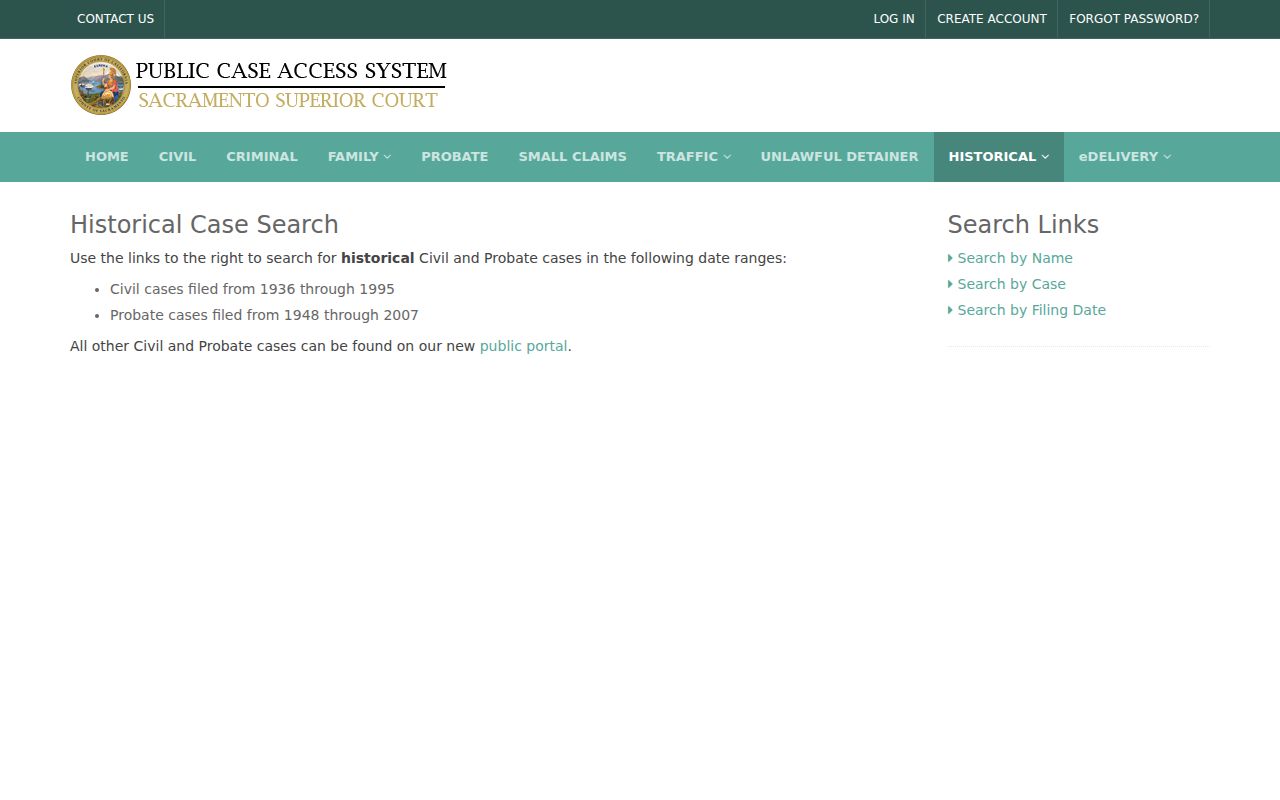
Use the case result only for the party and case facts it displays. For directory occupants, compare the scanned page, address, spouse or occupation marks, and a second record before treating two names as the same person.
Set Limits on Sacramento Voter Data
California My Voter Status is an individualized check using a voter's first name, last name, date of birth, and a driver-license, California ID, or SSN value when required. It can confirm status, party preference, vote-by-mail status, polling or vote-center information, and election participation. It cannot browse your neighbors by street or ZIP.
A Sacramento County voter extract requires requester or organization details, contact information, product and geography, a permitted election, scholarly, journalistic, political, or governmental purpose, identification, payment, and a signed use agreement. Approved products can be scoped by precinct, ZIP, or custom geography and are ready within 72 business hours. The published prices are $80 for a Standard Voter File, $105 for a Custom Voter File, $308 for four weeks of Voting Activity Status, and $616 for eight weeks. An Election Day status report has no charge.
Do not sell, lease, deliver, or republish a voter extract without written authorization. A ZIP-wide or custom geography can cross city and unincorporated precincts, and Elections Code sections 2180-2194 limit use and protect specified information.
The Criminal Public Case Access image below helps mark another boundary: a criminal name or case search is not proof of identity for the people next door.
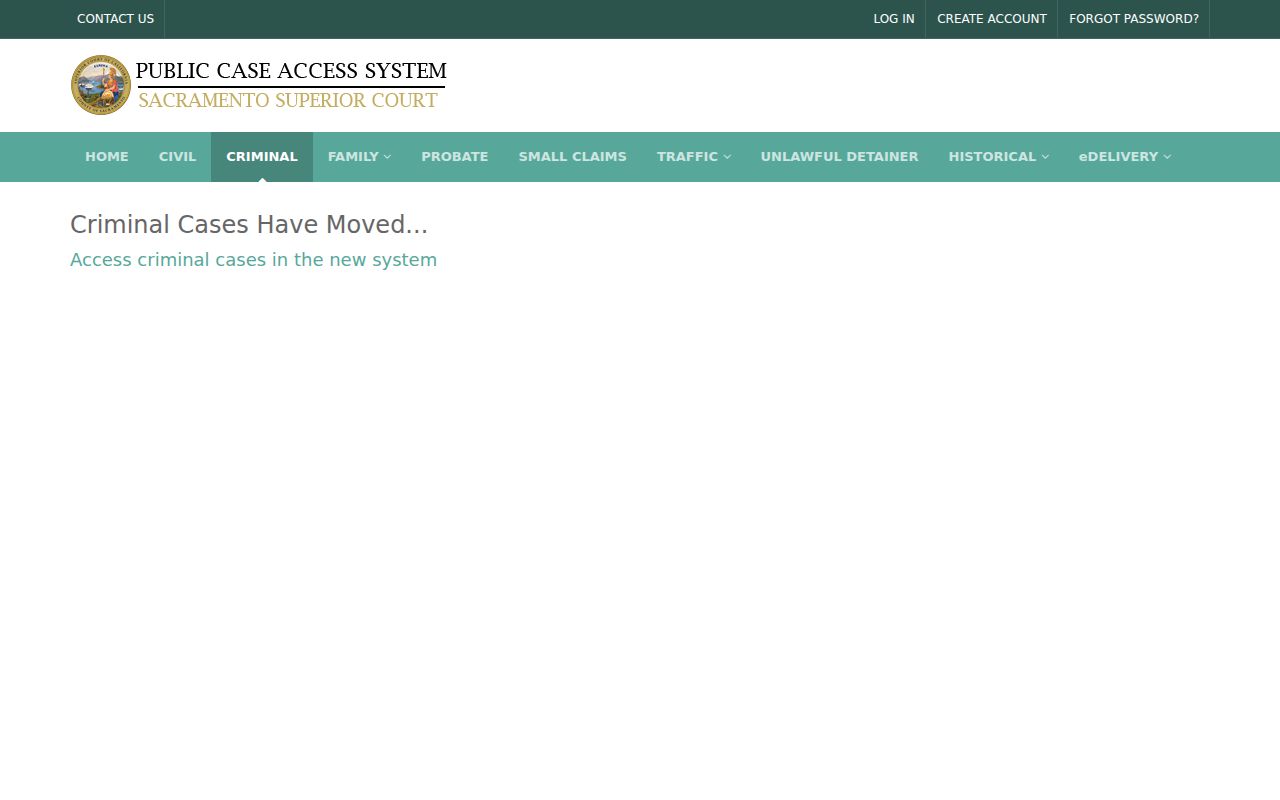
Crime maps are narrower still. They show incidents in a district or neighborhood over a stated period, not the identity of residents involved, and a map point is not proof of conduct by other Sacramento neighbors.
Use Sacramento Neighborhood Contacts
The City of Sacramento neighborhood directory is a contact and boundary layer. Groups seeking inclusion identify officers, define boundaries, and meet at least every three months. The directory does not function as a membership roll, and the city notes that community-supplied details are not guaranteed to stay current.
| Organization example | Boundary or eligibility | Public detail |
|---|---|---|
| Downtown Sacramento Partnership | H-N Streets and Sacramento River to 16th Street | Property-owner and business-improvement-district model; contact and boundary information |
| Del Paso Heights Community Association | People who live, work, own property, or own a business within its boundaries | $5 monthly dues and organization contact information |
| Other city district groups | North Natomas, Oak Park, Tahoe Park, South Land Park, Woodlake, Meadowview, and others | Directory listings, contacts, boundaries, meetings, and joining criteria vary |
Those examples show why an association name should not be turned into a claim about a household. Downtown's property-owner or BID structure differs from Del Paso Heights' live, work, own-property, or own-business eligibility. Use the official neighborhood association directory for a current contact, boundary, or meeting lead.
Search Sacramento Civic Records Nearby
City records can add civic context around an address without becoming a neighbor list. The City Clerk records library can surface agendas, commissions, contracts, campaign statements, and administrative correspondence. A CPRA request can describe a record title, department, address or name, and date range. Private or personnel material can be redacted.
Within city limits, LILA and permit or inspection records can show an address or APN, permit number, project description, dates, applicant, contractor, and land-use controls. Those names describe a project role. They do not prove that the person lives at the parcel.
The City records advanced search captured for this project shows the civic-record layer.
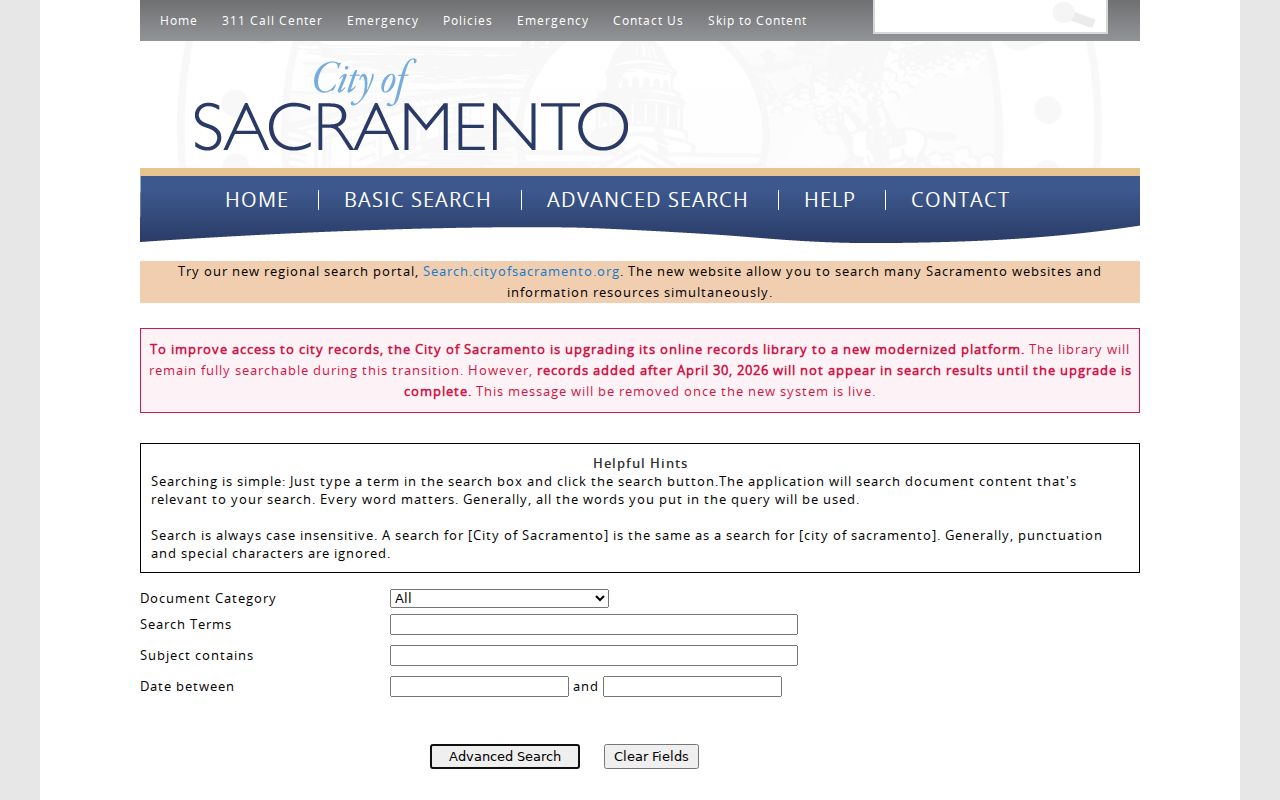
If the modern library does not return a needed item, use the City Clerk request channel and preserve the search date. A civic file can support a place history, but its names must be read in the role and date shown.
Compare Official and Commercial Neighbor Tools
Official records and commercial neighbor tools answer different questions. The official route is slower when a counter request or copy is needed, but it identifies the custodian, coverage, and record type. Commercial compilations may be quick, yet they can merge names, carry old addresses, and omit the reason a field appeared. Neither route should be used to turn a block into a list of private household details.
| Category | Useful strength | Important limit |
|---|---|---|
| Official parcel and assessor records | Traceable APN, situs, owner, and mailing fields | Owner is not necessarily occupant; access varies by field |
| Official court, voter, and city records | Named custodian, defined dates, and stated access rules | Coverage, purpose, redaction, and confidentiality limits apply |
| Commercial neighbor compilations | May combine many public and marketing data sets | Can be stale or merge names; not a certified source |
Use a commercial result, if encountered, only as a prompt to check the source office. The official record controls the fact, and a source image or custodian response controls the correction.
Keep a Sacramento Neighbor Lookup Lawful
Renters, household members, utility customers, delivery history, DMV addresses, protected voters, and Safe at Home participants are not open block fields. Safe at Home under Government Code sections 6205 and following provides a designated mailing address and mail forwarding for eligible survivors and specified reproductive-health participants. It does not erase every historic record, and a real-property legal description can expose location when property is purchased in one's own name.
Family records show the same access boundary. The Sacramento family file request form requires case and requester fields, while confidential family documents and adoptions are excluded from general public access.
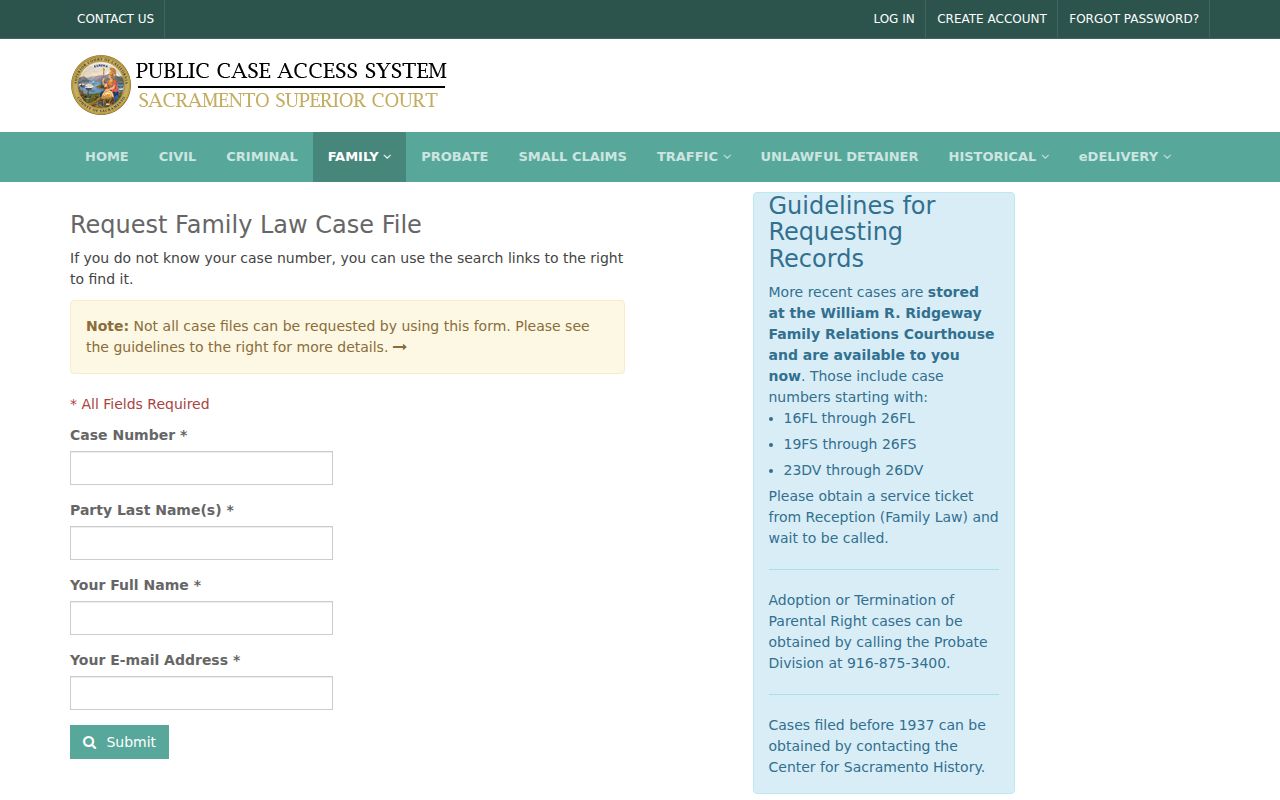
The form is a request channel, not a neighborhood roster. Respect protected records, correction procedures, and the line between a public owner field and a private household detail.
Lawful use. Sacramento neighbors research is for personal, lawful purposes such as getting to know a block, reconnecting, or safety awareness. Do not use address or family details to stalk, harass, threaten, or intimidate anyone.
Layer boundaries with care: a block can sit in a named neighborhood, council district, ZIP, school or service boundary, and parcel map at the same time. None is interchangeable with city limits. Stop when a source cannot support the identity or use you intended.